Types of renewable energy
Sustainable energy and renewable energy are often used interchangeably, but they are not synonymous. While there is some overlap, it’s crucial to understand the difference between the two. Renewable energy refers to sources that are naturally replenished at a higher rate than they are consumed.
In the following sections, we will explore various renewable energy sources (solar, geothermal, wind, hydropower, ocean / tidal, and bioenergy) that play a key role in sustainable energy systems.
Explore the key sources powering sustainable systems
Solar energy
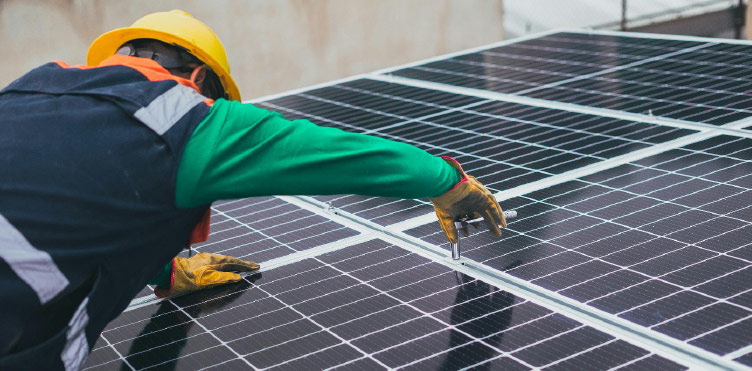
Solar energy is a powerful resource derived from the sun’s rays. It is harnessed using various technologies to produce electricity and heat.
Active solar technologies
- Photovoltaics: these devices generate electricity directly from sunlight via the photovoltaic effect where sunlight frees electrons creating an electric current in semiconductor materials.
- Concentrated solar energy (CSP): CSP systems use mirrors or lenses to concentrate sunlight onto a small area, generating heat that can power turbines or engines to produce electricity.
Passive solar technologies
- Passive solar space heating: This technique involves designing buildings to naturally collect and store solar heat during the day, which is then gradually released to maintain indoor temperatures. Techniques include large south-facing windows, Trombe walls, and strategic landscaping, such as planting shade trees.
Benefits of solar energy
- Low operating costs: Once solar systems are installed the operational and maintenance costs are relatively low compared to conventional power plants.
- Versatility: Solar panels can be installed in various locations, including rooftops, open fields, and even on water bodies.
Challenges of solar energy
- Space requirements: Solar panels require a significant amount of space, which can be a limitation for some properties.
- Energy storage: Storing solar energy for use during non-sunny periods requires batteries, which can add to the cost and complexity.
- Weather dependent: Solar energy production is dependent on sunlight, so it can be less effective in cloudy or rainy conditions and doesn’t generate power at night.
Solar energy at UNB
Both campus at UNB have solar panels in various locations.
As of 2025, the Fredericton campus has solar panels installed on two buildings Capital Planning and Operations (CP&O) and the Integrated University Complex (IUC) Science Library.
The panels on the CP&O building are a 17-kilowatt system, in operation since November 2022 and have produced 17,950 kWh in 2023/24.
The IUC panels are a 60- kilowatt system, in operation since November 2022 and have produced 45,770 kilowatt-hours in 2023/24.
UNB Saint John has a ground-mount 10 kW system located near the campus entrance, in operation since February 2024.
This panel has produced 11,850 kWh in 2024/25 as of April 2025.
Geothermal energy

Geothermal energy is thermal energy stored within the Earth which can be extracted and directly used for heating or converted to electricity.
Harvesting geothermal energy for heating and cooling
- Low-temperature geothermal energy: Low-temperature geothermal energy refers to the use of geothermal resources that are relatively close to the Earth's surface and have temperatures below 150°C (302°F). This type of energy is ideal for direct-use applications, such as heating buildings, greenhouses, and industrial processes. Unlike high-temperature geothermal energy, which is primarily used for electricity generation, low-temperature geothermal energy is more commonly used for heating and cooling purposes. It is a sustainable and efficient way to harness the Earth's natural heat, often using geothermal wells or shallow geothermal systems.
- Co-produced geothermal energy: Co-produced geothermal energy involves extracting geothermal heat from the hot water or brine that is produced as a byproduct of oil and gas extraction. This method taps into existing infrastructure to utilize geothermal resources that would otherwise go to waste. By using the heat from co-produced fluids, energy companies can generate additional electricity or provide heating and cooling without drilling new wells specifically for geothermal purposes. This approach not only reduces the environmental impact but also maximizes the efficiency of resource extraction.
- Geothermal Heat Pumps (GHPs): Also known as ground-source heat pumps, are a highly efficient technology used for heating and cooling buildings. Unlike conventional heat pumps that rely on outside air, GHPs use the stable temperature of the ground or groundwater to exchange heat. In the winter, GHPs transfer heat from the ground into a building, during summer, they reverse the process to provide cooling. These systems can reduce energy consumption by up to 50% compared to traditional heating and cooling methods, making them a popular choice for residential, commercial, and institutional applications. GHPs can be installed in a variety of settings, from individual homes to large-scale facilities, offering both cost savings and environmental benefits.
Harvesting geothermal energy for electricity production
- Dry steam power plants: These plants use steam directly from a geothermal reservoir to drive turbine-generator units.
- Flash steam power plants: These plants extract high-pressure hot water from deep within the Earth and convert it to steam to drive turbine-generator units. Once the steam cools and condenses back into water, it is re-injected into the ground for reuse. Most geothermal power plants worldwide are flash steam plants.
- Binary cycle power plants: These plants transfer heat from geothermal hot water to another fluid. The heat causes the secondary fluid to vaporize, and this vapor drives turbine-generator units.
Benefits of geothermal energy
- Long-lasting infrastructure: Geothermal power plants have the potential to operate for decades, even centuries. With proper reservoir management, the extracted energy can be balanced with the natural renewal of the rock’s heat.
- Reliable, continuous operation: Geothermal power plants can run at near-full capacity 24/7, year-round, unaffected by seasonal or environmental changes.
Challenges of geothermal energy
- High initial costs: While geothermal energy doesn't require fuel, the upfront costs for implementing harnessing technology can be significant.
- Potential for induced seismicity: Injecting high-pressure water into the Earth's crust can trigger minor seismic activity.
- Risk of water contamination: Water passing through underground reservoirs can absorb trace amounts of toxic elements like mercury, selenium, and arsenic, which may then leak into nearby water sources.
- Environmental impact: Although minimal, geothermal plants can release small amounts of GHG emissions, such as carbon dioxide and hydrogen sulfide.
- Linked to subsidence: The collapse of underground fractures can lead to subsidence, causing damage to pipelines, roadways, buildings, and natural drainage systems.
Geothermal energy at UNB
In January 2021, the new Barry & Flora Beckett Residence was completed on UNB Saint John’s campus.
The 37,832 square foot residence with 105 rooms is the first building at UNB to be heated and cooled by geothermal technology.
There are 30 geothermal wells that have been drilled into the upper parking lot to provide energy efficient heating/cooling for the new building.
The use of renewable geothermal energy allows for the expansion of the campus to better accommodate students, without increasing UNBSJ’s environmental footprint.
The residence is projected to save $28,867 annually on energy costs.
Because of the Fredericton well fields, UNB Fredericton can't have geothermal. However, the campus does have Earth tubes in two buildings: the Kinesiology building and the Head Hall atrium.
Earth tube technology is an innovative technology, a type of geothermal system that pre-heats and pre-cools the building.
In the Kinesiology building, there is a series of eight Earth tubes, 35 feet underground that bring in fresh air through the two stainless steel towers out front of the building.
The air gets carried under the building into the mechanical room at the back of the building. Depending on the season, the air moving through the Earth tubes will be pre-heated or pre-cooled by the time it reaches the back of the building, resulting in practically free energy to disperse into the building.
No additional steam is needed to heat this building in the winter.
In Head Hall, three Earth tubes provide free pre-heating and pre-cooling to the new Head Hall atrium area.
The new atrium will be heated and cooled by 100% recovered energy (through Earth tubes, heat wheel, and heat recovery chiller), resulting in no requirement for steam to heat this area of the building in winter.
Wind energy

Harnessing the power of the wind, wind turbines convert its kinetic energy into electricity, providing a clean and sustainable alternative to electricity generation from fossil fuels.
Harnessing wind energy
A wind turbine converts wind energy into electricity by utilizing the aerodynamic force present. As wind flows over the blades, the air pressure on one side decreases, creating a pressure difference that results in both lift and drag.
The lift force, being stronger than the drag, causes the rotor to spin. This rotor connects to a generator, either directly (in direct drive turbines) or through a shaft and a series of gears (a gearbox) that increase the rotational speed, allowing for a smaller generator.
This process of converting aerodynamic force into the rotation of a generator produces electricity.
Benefits of wind energy
- Rapid emissions payback: Although wind turbines have associated lifecycle emissions, these are generally offset within the first year of operation.
- Low operating costs: Once a wind turbine is installed, the operational and maintenance costs are relatively low compared to conventional power plants.
Challenges of wind energy
- Space requirements: Wind farms require large areas of land or offshore space, which might not be available or suitable in all regions.
- Transmission challenges: Wind farms are often located in remote areas, requiring extensive transmission infrastructure to deliver electricity to where it’s needed.
- Impact on wildlife: Wind turbines can pose risks to wildlife, particularly birds and bats, which may collide with the blades. Additionally, wind farms can lead to the displacement of local species and disrupt natural habitats.
Wind energy in New Brunswick
As of 2024, New Brunswick Power Corporation (NB Power) has 355-megawatts of wind energy on its grid, which has the capacity to power approximately 180,000 homes in the province.
Kent Hills Wind Farm began in 2008 and is the provinces largest wind facility. This wind farm alone produces an estimated 580,000-megawatt hours annually.
The critical question is whether renewable energy sources alone can meet our growing energy needs. As our consumption increases, we must assess whether renewable sources can keep pace or if non-renewable options will still be necessary.
While a future powered solely by renewable energy is promising—thanks to significant advancements and untapped potential—we must also recognize the indirect environmental impacts of renewables, such as habitat disruption and resource use.
Achieving true sustainability will require not only a shift to renewable energy but also a balanced approach that includes improved efficiency, innovative technologies, and careful consideration of the environmental footprint of all energy sources.
Hydropower

Hydropower, or hydroelectric power, uses the kinetic energy of flowing water to generate electricity. This energy is harnessed by constructing dams or diversion structures that alter the natural flow of bodies of water.
The elevation difference created by these structures, with water flowing in at a higher point and out at a significantly lower point, is used to generate power.
Harvesting hydropower
Hydropower plants typically operate by channeling water through a pipe (penstock) to spin the blades of a turbine.
This turbine connects to a generator, which converts the kinetic energy of the moving water into electrical energy.
The amount of electricity generated depends on the volume of water flow and the height difference (head) between the water source and the turbine.
Watch Energy 101: Hydropower for a brief overview of hydroelectric power
Types of hydropower facilities
- Impoundment: These are large structures that store water in a reservoir. The stored water is released to generate electricity when needed.
- Diversion: These facilities generate electricity without significantly altering the flow of the river. They divert a portion of the river’s flow through a powerhouse before returning it to the river.
- Pumped storage: This type of facility stores energy by pumping water uphill to a reservoir during low demand periods and releasing it to generate electricity during peak demand.
Benefits of hydropower
- Reliable and flexible: Hydropower plants can quickly adjust to changes in electricity demand, providing a stable and flexible power supply. It provides the quick-response generation needed to stabilize the grid during energy demand fluctuations.
- Low operating costs: Once a hydropower plant is built, the costs of operation and maintenance are relatively low compared to other forms of energy.
Challenges of hydropower
- Negatively impacts surrounding areas: While hydropower is a clean energy source, it can have significant environmental and social impacts. The construction of large dams can disrupt local ecosystems, displace communities, and affect water quality.
- High initial construction costs: Building a hydroelectric power plant requires significant upfront investment.
- Environmental impact: The environmental effects can vary depending on site-specific production and mitigation: However, all inland waters naturally produce some GHG emissions. The construction of human-made reservoirs for hydropower facilities alters the carbon dynamics in river systems. While these reservoirs sequester some carbon, they also release embedded carbon as methane (CH4) emissions.
Hydropower in New Brunswick
New Brunswick is home to seven hydroelectric power generating stations. These stations are located at Nepisiguit Falls, Sisson, Grand Falls, Tobique, Beechwood, Mactaquac and Milltown.
The largest of these stations is the Mactaquac Dam (Mactaquac meaning ‘Big Branch’ in Maliseet).
The Mactaquac Dam has a generation capacity of 672 megawatts and provides power to about 12% of New Brunswick homes and businesses.
Hydropower has been the most reliable and cost-effective energy resource for the province in comparison to other power alternatives.
Bioenergy
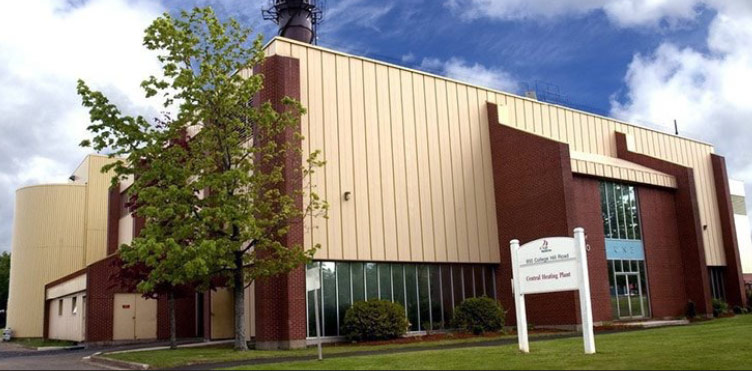
Bioenergy is derived from biomass which is often utilized to generate heat, electricity and transportation fuels.
It has substantial GHG emission mitigation potential, provided biomass resources are sustainably sourced and efficient bioenergy systems are implemented.
Harvesting bioenergy
Bioenergy can be extracted from biomass through several methods:
- Combustion: This is the most common method for converting biomass into usable energy. By burning biomass directly, we can generate heat for buildings, water, and industrial processes, as well as produce electricity using steam turbines.
- Anaerobic Digestion (AD): This biological process involves microorganisms breaking down organic materials in the absence of oxygen. The result is biogas—a mixture primarily of methane and carbon dioxide—and digestate, a nutrient-rich byproduct.
- Conversion to gas or liquid fuels: This involves breaking down biomass into gaseous or liquid intermediates through either high-temperature or low-temperature deconstruction processes. High-temperature deconstruction techniques (such as pyrolysis, gasification, and hydrothermal liquefaction) use extreme heat to convert solid biomass into liquid or gaseous intermediates. Low-temperature deconstruction techniques see that biomass is first pretreated chemically or mechanically to open its structure and then broken down with chemicals or specialized enzymes to produce biofuels. Following deconstruction, these intermediates are upgraded through chemical or biological processes to produce finished biofuels.
Benefits of bioenergy
- Widely available: Since sources can be gained from agriculture, forestry, and fisheries, biomass for bioenergy is readily accessible.
- Carbon offset potential: When crops are maintained sustainably, they can help offset the carbon emissions generated during bioenergy production by absorbing carbon dioxide from the atmosphere during their growth.
Challenges of bioenergy
- Space requirements: Biomass energy production often requires large areas, which can limit the feasible locations for bioenergy plants.
- Biodiversity impacts: The production and use of biomass can harm biodiversity, especially when natural habitats are disrupted or destroyed for wood harvesting, leading to species loss and ecosystem disruption.
- Water usage: Water resources can be strained due to the irrigation demands of bioenergy crops, potentially leading to reduced water availability for other uses.
- Soil health: Soil health can also be compromised by intensive cultivation practices, which may result in erosion, nutrient depletion, and reduced fertility over time.
- Climate change: Bioenergy production contributes to climate change in complex ways. While it can reduce GHG emissions compared to fossil fuels, land-use changes associated with biomass production can release stored carbon, potentially offsetting some of these benefits. The long-term resilience of ecosystems can be weakened if bioenergy practices are not managed sustainably, leading to a decline in ecosystem services that are crucial for environmental stability.
- Human health: the environmental effects of bioenergy can have direct and indirect consequences on human health, including exposure to pollutants from bioenergy processes and changes in local environmental conditions that affect well-being.
Bioenergy at UNB
UNB Fredericton has had a biomass boiler for over 40 years which enables us to heat the campus and external buildings using about 40-45% biomass on an annual basis.
The wood boiler has reached its end of life around 2024 and is being replacing with a new (and more efficient) biomass boiler that will allow heating the campus and external buildings using 70-75% biomass on an annual basis.
The future plan for the heating plant is to have a co-generation system with the biomass boiler and a turbine, allowing UNB to produce electricity to power some of the campus buildings.
On an annual basis, the heating plant produces around 230,000,000 lbs of steam. It provides heat to UNB, Saint Thomas University (STU), Research & Productivity Council (RPC), and the Dr. Everett Chalmers Hospital (DECH).
Ocean / tidal energy

Ocean energy refers to all forms of renewable energy derived from the ocean’s movement and varying temperatures.
Though it is an abundant energy resource, it faces significant environmental, technological, and financial challenges and has lower levels of investment when compared to other renewables.
Harvesting ocean / tidal energy
There are four main types of ocean energy systems:
- Tidal barrage systems
- Tidal stream/ tidal current systems
- Wave energy systems
- Ocean Thermal Energy Conversion (OTEC)
Tidal barrage systems
A tidal barrage is a dam-like structure built across inlets of bays or lagoons to form a tidal basin. It harnesses energy from the natural rise and fall of tides caused by the gravitational interaction between the Earth, the moon, and the sun.
Tidal stream / tidal current systems
Tidal Stream Energy captures kinetic energy from the movement of water driven by tidal currents. Similar to wind turbines, tidal stream turbines are mounted on the ocean floor or floating platforms to extract energy from the moving water.
Wave energy systems
A wave’s energy is derived from its height, velocity, length, water density, and speed. Like tidal energy, the power output is proportional to the cube of the wave’s velocity, meaning that if the water speed doubles, the potential power increases significantly.
Learn more about Ocean Energy
Ocean thermal energy conversion
This form of energy conversion uses the temperature difference between warm surface waters of the oceans and the colder deep waters to generate power in a conventional heat engine.
Benefits of ocean / tidal energy
- Predictable and reliable: Ocean Energy sources like tides and currents are more predictable and reliable compared to other renewables such as wind and solar.
- Offshore location: Ocean energy installations are typically offshore minimizing visual impact and land-use requirements.
Challenges of ocean / tidal energy
- High initial cost: The development and installation of ocean energy technologies can be expensive, requiring significant upfront costs.
- Accessibility and maintenance difficulties: Offshore installations can be challenging to maintain and access, leading to higher operational costs.
Ocean / tidal energy in New Brunswick
New Brunswick currently lacks any tidal energy systems. The Bay of Fundy, home to the highest tides in the world, sees over 100 billion tonnes of water flowing through it.
Harnessing this energy has been a long-standing goal for engineers and scientists. However, installing and managing such systems in this powerful environment presents both technical and environmental challenges.
While new technologies with low environmental impacts are being developed and tested, their high development costs continue to be a significant obstacle.

This work is licensed under a Creative Commons Attribution-NonCommercial 4.0 International License.