Renewable Energy
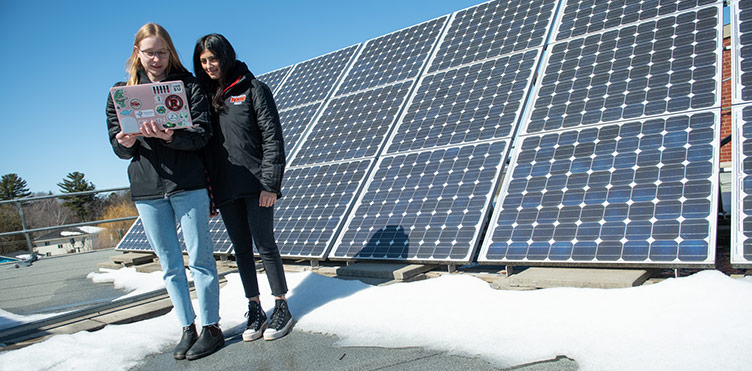
We depend on energy every day to power our lives. Renewable energy helps mitigate climate change by reducing greenhouse gas (GHG) emissions. It also offers long-term, sustainable energy solutions.
Key definitions
Renewable energy: Energy derived from natural sources that are not depleted when used.
Biomass: Renewable organic matter derived from forestry, agriculture, or waste streams.
Energy efficiency: Achieving the same result or performing the same task while using less energy.
Generator: A device that converts mechanical energy into electrical energy via electromagnetic induction.
Greenhouse gas (GHG) emissions: Emissions that effectively act like a greenhouse or a layer of insulation for Earth: they trap heat and warm the planet.
Non-renewable energy: Energy derived from sources that cannot be replenished by natural processes at a pace quick enough to keep up with consumption.
Turbine: A device that converts the kinetic energy of the flow of fluid into rotational motion.
Work: The transfer of energy that occurs when an external force moves an object.

This work is licensed under a Creative Commons Attribution-NonCommercial 4.0 International License.