Our people
Director

Fred Burrill is a settler historian of working-class formation and disintegration, focusing on deindustrialization, settler colonialism, and white supremacy in Quebec and the Maritimes.
He completed his PhD at Concordia University, where he is a Core Affiliate of the Centre for Oral History and Digital Storytelling.
He also works with the Deindustrialization and the Politics of Our Time research partnership, a transnational initiative bringing together academic researchers, labour unions, museums, and archives across Canada, the U.S., the U.K., France, Italy, and Germany to look at the causes and consequences of plant closures and working-class relegation in these countries.
Fred grew up in rural Nova Scotia, in the heart of Eastern Canada’s lumber industry, and witnessed the dire consequences of deindustrialization on his community.
Advisory Board
Claudine Bonner
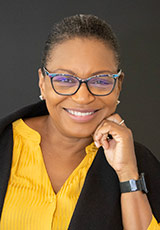
Dr. Claudine Bonner (she/her) is the current Canada Research Chair in Racial Justice and African Diaspora Migration in Atlantic Canada, and an Associate Professor in the Sociology Department at Mount Allison University.
Her teaching focuses on issues of equity and racial justice. She is building a collaborative, multi-disciplinary network to improve our knowledge of the history of Black Canadian migration. Her current research explores early twentieth century African-Caribbean and Canadian migration networks.
Dr. Bonner served as the inaugural Vice Provost of Equity, Diversity and Inclusion at Acadia University.
Her forthcoming publication "The Black Press: A Shadowed Canadian Tradition" is a collection of essays co-edited with Drs. Nina Reid-Maroney and Boulou Ebanda de B bèri. This collection, spanning the period from the 1850s to the early twentieth century, is the first in the field to bring together original historical and Communication Studies research that position pioneering Canadian Black journalists as effective intellectual activists.
Gül Çalışkan
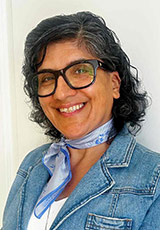
Gül Çalışkan is Professor of Global Sociology at St. Thomas University, located on unceded Wolastoqey Territory (Fredericton, New Brunswick, Canada). She received her PhD in Sociology from York University, where her doctoral research focused on the diasporic citizenship practices of Turkish-background residents in Berlin, Germany. She joined the Department of Sociology at STU in 2013.
Gül’s research and teaching are grounded in postcolonial studies, postcolonial feminism, and narrative inquiry. Her work explores the intersections of migration, citizenship, racial justice, and global social inequalities, with a focus on how global processes shape everyday lived realities.
She is the author of Forging Diasporic Citizenship: Narratives from German-born Turkish Ausländer (UBC Press, 2023) and editor of Gendering Globalization, Globalizing Gender: A Postcolonial Approach (OUP, 2020). She also leads Promise of Home, a SSHRC-funded, community-based narrative research project focused on immigrant belonging and policy transformation in Fredericton.
She teaches a range of undergraduate courses, including: Sociology of Globalization; Globalization and Gender; Racialization and Indigeneity; Orientalism, Islamophobia, and Postcolonial Transgressions; Advanced Theory; Qualitative Methods; Research for Social Change.
Tobin LeBlanc Haley
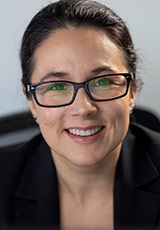
Tobin LeBlanc Haley, PhD (she/her) is an Assistant Professor of Sociology, co-director of the Housing, Mobilization and Engagement Research Lab and white settler who was born and raised in Wolastoqey territory.
She is a community-engaged social policy scholar with a primary focus on housing. Her research is largely directed by expressed community need and she is currently focussed on the implications of government decision making for people living at the intersection of housing precarity, poverty and disability, the urgent need for change and the possibilities for a more just future.
Dr. LeBlanc Haley is on the boards of the New Brunswick Media Co-op and the New Brunswick Coalition for Persons with Disabilities and is a founding member of the New Brunswick Coalition for Tenants' Rights. In her spare time she enjoys community organizing, running and hanging out with her young children.
Gabe Hrynick
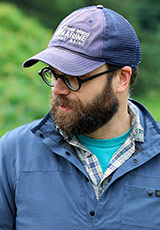
Gabe Hrynick is an archaeologist specializing in the study of coastal hunter-gatherers, especially their domestic and ritual structures and spaces, and their adaptations to changing coastal environments. He also is active in public archaeology and experiential education in archaeology. As director of the Northeastern Archaeological Survey, he has over a decade of community-engaged multi-disciplinary field research in the coastal Northeast.
Gabe is the co-author of The Archaeology of the Atlantic Northeast (University of Toronto Press, 2021) and the Bibliography of New Brunswick Archaeology: Works to 2022, and co-editor of The Far Northeast: 3,000 BP to Contact (Canadian Museum of History/University of Ottawa Press, 2022). He co-hosts an award-winning fortnightly podcast, the New Brunswick Archaeology Podcast.
Christine Lovelace
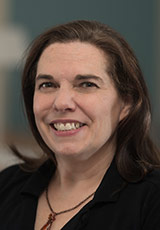
Christine Lovelace currently serves as Academic Archivist and Head of UNB’s Archives & Special Collections, located in the Harriet Irving Library as part of UNB Libraries. UNB’s Archives holds papers related to the history of UNB, NB literary authors, and NB history. Archives & Special Collections also houses the Loyalist collection (microforms).
Previous to starting at UNB in 2016, she was a Senior Project Archivist with Library and Archives Canada and has held positions at institutions such as Acadia University, Mount Saint Vincent University, the International Monetary Fund, Columbia University, and the Nova Scotia Archives.
Christine holds a Master’s degree in Records and Archives Management from University College London (2001) and a BA in Music History from Carleton University (1990).
Heidi MacDonald
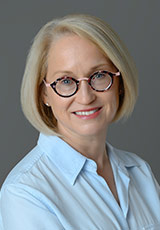
Dr Heidi MacDonald is Dean of Arts and Professor of History and Politics, University of New Brunswick Saint John with specializations in twentieth-century Canada, Atlantic Canada, the Great Depression, women religious (nuns), suffrage, and youth.
She recently published We Shall Persist: Women and the Vote in the Atlantic Provinces. Vancouver: University of British Columbia Press, 2023.
Her current book project is “On Hold? Youth and the Great Depression in Canada.”
From 1999 to 2018, Heidi was a member of the History Department at the University of Lethbridge and founding Director of the Centre for Oral History and Tradition.
Lachlan MacKinnon
Lachlan MacKinnon is the Canada Research Chair (Tier II) In Post-Industrial Communities at Cape Breton University.
His research examines the intersections of political economy, bodily health, and environmental changes wrought by deindustrialization.
He is the author of Closing Sysco (2020), which examines the history of work and industrial closure at the Sydney Steel Works in Nova Scotia.
His recent co-edited collection, Cape Breton in the Long Twentieth Century: Formations and Legacies of Industrial Capitalism, explores the history of capitalism and deindustrialization, with special focus on settler-colonialism, environment and ecology, labour and occupational health and state policy.
Heather Millar
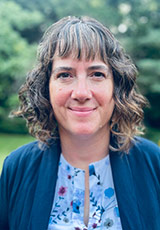
Heather Millar is an Associate Professor in the Department of Political Science at the University of New Brunswick.
She is the author of Fracking Uncertainty (2024, UTP), a comparative study of provincial hydraulic fracturing regulation in Canada, including New Brunswick and Nova Scotia.
Her current research examines the intersection of energy and climate politics, focusing on the role of narratives in shaping policy learning and feedback in subnational jurisdictions.
Joanne Owuor
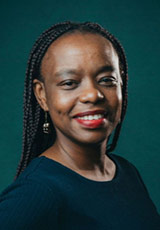
Joanne Owuor is a seasoned advocate for economic, social, and racial justice with 19 years of experience in community work. She has spent over a decade designing and implementing programs for underrepresented immigrant children, youth, and families.
A big-picture thinker with an eye for detail, Joanne is passionate about moving institutions toward racial equity through advocacy, education, and community building.
Her expertise includes developing culturally inclusive programs and policies, delivering cultural competency training, and leading anti-oppressive strategies.
Joanne has served on multiple committees and working groups in social work, mental health, and Local Immigration Partnerships (LIPs), where she has led multi-sectoral teams to create inclusive services.
Ajay Parasram
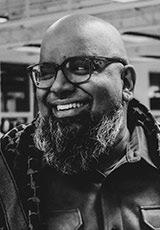
Ajay Parasram is a transnational multigenerational byproduct of the British empire, learning to live an unsettled life in Kjipuktuk, Mi'kma'ki.
He is an Associate Professor in the departments of History, International Development Studies, and Political Science at Dalhousie University.
Ajay's research centres the colonial present, or the many ways through which historical colonial encounters continue to exert structural pressure on the limits of freedom and decolonization in the present and future.
His most recent monograph, Pluriversal Sovereignty and the State: Imperial Encounters in Sri Lanka (Manchester UP, 2023) is the recipient of the 2024 International Theory Prize from the Centre for Advanced International Theory (University of Sussex) and the 2025 Global Development Studies of the International Studies Association's Best Book Prize.
Learn more about Ajay Parasram
Angela Tozer
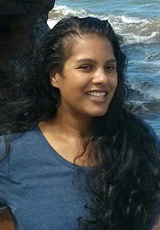
Angela Tozer is an Associate Professor in the Department of Historical Studies who specialises in Canadian history with a focus on the 19th century.
Her research explores the relationship between capitalism and settler colonialism, and she works to build respectful professional relationships that prioritise a holistic approach to the study of the Canadian settler state that does not exclusively focus on archival and colonial documentation.
It is important to Angela to balance between archival and oral history, and she work with both Indigenous and settler community members.
Natasha Cecilia Simon
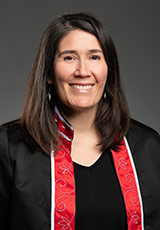
Natasha Simon is the daughter of Cecilia Powers (Francis) and grand-daughter of Lillian Francis’oq.
She is an assistant professor in the Faculty of Education and the Mi’kmaq-Wolastoqey Centre at UNB.
Her current research centres on the special significance of nugumijg (grandmothers) in Mi’kmaq culture and on the life and work of her own great grandmother, Isabella Simon, who was a healer, midwife, and basket maker from Elsipogtog.
Natasha’s other research and supervisory interests include justice for Indigenous peoples, Aboriginal title, the Peace and Friendship Treaties, the history of systemic racism and police violence against Indigenous peoples, and Indigenous research methodologies.
Lee A. Windsor
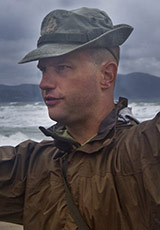
Dr. Lee Windsor teaches and supervises in the history of warfare in the modern world.
His research interests centre on the Canadian Armed Forces role in multi-national coalition operations around the globe, during the two world wars and as well as United Nations and NATO operations in the Former Yugoslavia, the Middle East and Afghanistan.
He holds a BA from Acadia University, an MA from Wilfrid Laurier and a PhD from the University of New Brunswick.
He is part of the Gregg Centre team that delivers Field Study Programs in Sicily and Italy and our War and the Canadian Experience Teachers Professional Development Program in France, Belgium, Germany, and the Netherlands.