Internships
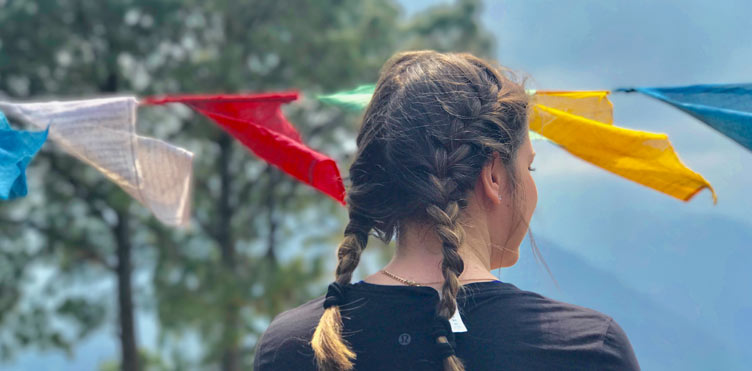
Malaysia, 2024
Learn leadership by living it
Internships at the School of Leadership Studies are not an add-on. They are a defining part of the degree that helps students connect ideas to action, and build the judgement, confidence, and ethics to lead well in real settings.
Students complete two full credit, leadership focused internships: a Canadian placement and an international placement. Both are supported through preparation, ongoing guidance, and structured reflection so the learning lasts well beyond the semester.
Guided every step of the way
Internships can be exciting, challenging and deeply formative. Students are supported before, during and after each placement by the Experiential Education Coordinator through placement planning, goal setting, preparation sessions, academic assignments, feedback, and debriefing their placement experience.
Across both internships, students are guided to integrate who they are, what they have been learning in the classroom, and what they are experiencing in the field. Reflection is built into the assignments and touch points throughout the placements, because growth is not just about what you do, but what you learn from it.
Canadian internship
A full-time paid placement of at least ten weeks with an organization in Canada, paired with academic work. Students learn in a professional environment with guidance from a mentor, relating leadership theory with their workplace context for a work-integrated learning experience.
Overview
The internship is shaped by specific, measurable goals set early in the placement by the intern and mentor and then approved by the Experiential Education Coordinator.
Students receive ongoing feedback, plus formal evaluations (usually mid-placement and at the end). Placements are reviewed for educational value and safety, and an Education Placement Agreement is signed with the partner organization before the internship begins.
Preparation that sets students up to succeed

Canadian internship prep mock interviews, 2024
Students enter their Canadian Internships with structured preparation that strengthens professional confidence.
This includes support with placement planning and goal setting, plus a profession preparation process that includes mock interviews, a practice that has been part of our approach since 2012.
What students gain
- Leadership learning grounded in experience
- A stronger resume and professional readiness through professional responsibilities, feedback and tangible examples of skills in action.
- Mentorship, networking, and professional development through relationships with supervisors, teams, and community partners.
- Clarity about career direction by exploring roles, sectors, and strengths before graduation, helping students make more informed decisions about what comes next.
Recent Canadian internship placements
- Ottawa, Ontario
Library of Parliament
Role: Parliamentary Guide
Description: Deliver high-quality visitor services and guided tours, helping the public understand Parliament through clear communication and interpretation. - Fredericton, New Brunswick
12 Neighbours Community
Role: HR Policies and Procedures Intern
Description: Support the development of HR policies and procedures across multiple teams within a purpose-driven social enterprise, strengthening organisational systems and people practices. - Halifax, Nova Scotia
Saint Mary’s University
Role: Recruitment and External Affairs Intern
Description: Support the development and implementation of recruitment and external relations initiatives, contributing to outreach and program improvement. - St. Andrews, New Brunswick
Dragonfly Centre for Autism
Role: Camp Assistant
Focus: Inclusive programming and support
What students do: Support children with autism and other disabilities in a camp setting, while also assisting with organizational tasks behind the scenes.

Vietnam, 2024
International internship
For at least ten weeks, students engage in volunteer work with local organizations working to improve their communities in areas such as human rights, environment, sustainable community development, arts and culture, social innovation, leadership, gender, education and health.
Overview
The international internship is an immersive cross-cultural educational experience.
Our students are taught to arrive at their placements with questions instead of answers, embracing an international cooperation approach.
They are invited to come alongside existing projects within their host organizations, contributing to partner-led community efforts in order to learn with and from local professionals and communities.
Ethics, preparation and care
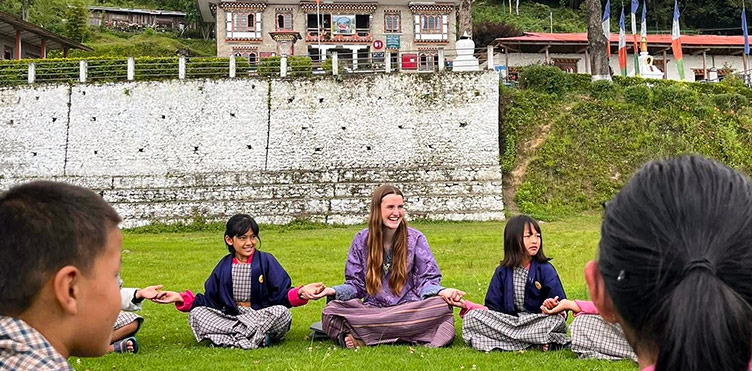
Bhutan, 2025
The preparation process is spread out across the entire second year of the BPhil, allowing students to gradually prepare for their placements from a logistics, academic and psychological perspective.
Additional courses in the program throughout their second year complement this preparation process through covering content that includes research methods, systems thinking, cross-cultural communication and global policy.
Students engage in critical reflection on ethical challenges associated with volunteering abroad, explore power and privilege in cross-cultural contexts, and build skills in cross-cultural communication and adaptation.
The Experiential Education Coordinator coordinates the selection process with community partners, works with host organizations to co-develop the projects and activities students will be involved in during their placements and supports students as they coordinate their personal logistics, including visas, flights, accommodations, insurance, banking, etc.
Students are supported from a distance in partnership with the host organization, with emphasis on wellbeing, safety, and educational experience.
Regular check-ins at personal, placement and cohort levels enable us to provide personalized support to students throughout their placement and ensure that they stay connected and continue to learn from each other as a cohort.
Academic learning reflection
Alongside the placement, students complete academic work that helps them connect what they are seeing and doing to deeper questions about leadership, ethics, and community.
For the international internship, this includes exploring a social, political, economic, or environmental issue connected to the local context through personal observations and interviews with local individuals, which are then integrated with academic conversations on the topic.
This matters for the world students are entering. In the World Economic Forum’s Future of Jobs Report 2025, analytical thinking remains the most sought-after core skill (identified by about seven in ten employers), followed by resilience, flexibility and agility, and leadership and social influence.
Through research, reflective writing, and synthesis, students develop the same transferable skills employers desire, while staying grounded in SLS’s commitment to developing adaptable, ethical leaders through global opportunities and strong community connections.
Recent international placements
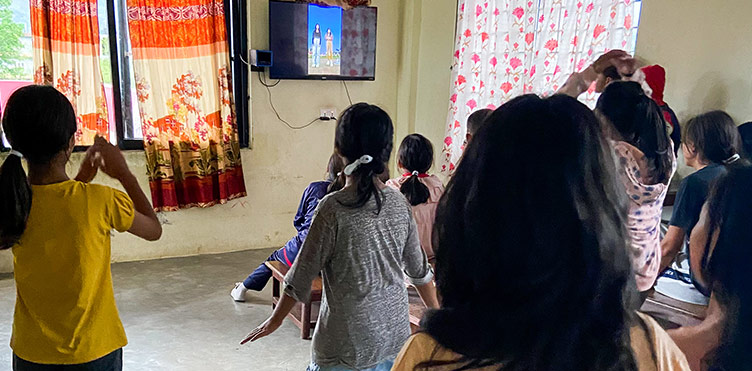
Nepal, 2023
- Hanoi, Vietnam
Foreign Trade University, Faculty of International Education
Role: Intern
Description: Collaborate with faculty, staff and interns on communications and student engagement, including social media content, recruitment initiatives, and workshops for students preparing to transfer to UNB. - Kanglung, Bhutan
Sherubtse College
Role: Intern
Description: Participate in an immersive cross-cultural experience through residence life and campus learning, and support leadership workshops and community-based initiatives through the Sherubtse Student Leadership Programme. - Pokhara, Nepal
Himalayan Buddhist Academy
Role: Intern
Description: Become part of a hostel community supporting children’s daily routines, learning, and wellbeing through contributions to meals, activities, supervision, and community life. - Perhentian Islands, Malaysia
Fuze-Ecooter
Role: Turtle Project Volunteer Coordinator
Description: Lead volunteer activities, build skills in communication and outreach, and support conservation work through daily sea turtle data collection and monitoring.
Aesthetic Engagement (capstone reflection project)
To help students make sense of what they learned and experienced, the international internship course includes an Aesthetic Engagement project.
Students explore a local issue in depth, complete a research paper, and create an aesthetic piece that communicates insight through an alternative medium.
These pieces are displayed at SLS throughout the following year as a physical reminder of where students have recently been, where current students might be going next, and as an ongoing catalyst for dialogue about the challenges communities face.
Aesthetic Engagement Project by Eva Palmer, 2025
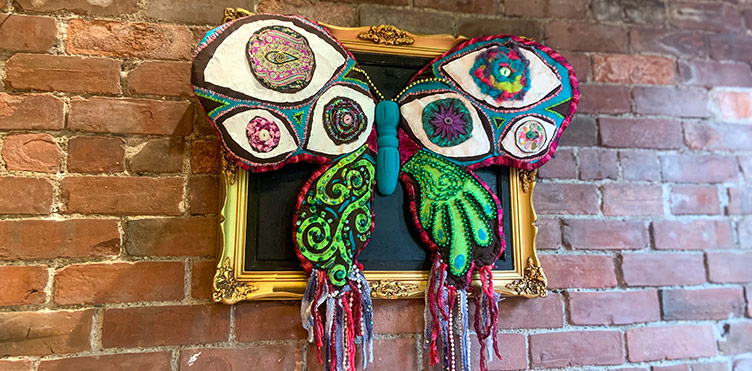
“Having my privilege glaring in my face and being called things like princess made me completely reassess my view of the world. I had to constantly remind myself that my idea of the world had been shaped, not chosen, and I had the power to reshape it.
These concepts are represented in my piece through the six eyes in the wings. While they represent the entirety of seeing things differently, they are particularly relevant to how I now perceive myself, as well as my relationships with religion, cultures different from my own, and the world around me.”