
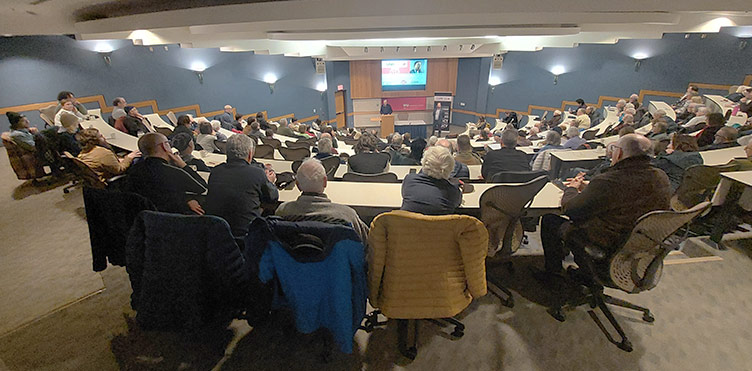
These lectures allow history research to transcend academic barriers promoting conversations between historians, students and the public. These lectures allow historians to broadly disseminate their research and enables the public to take part in emerging and innovative historical research.
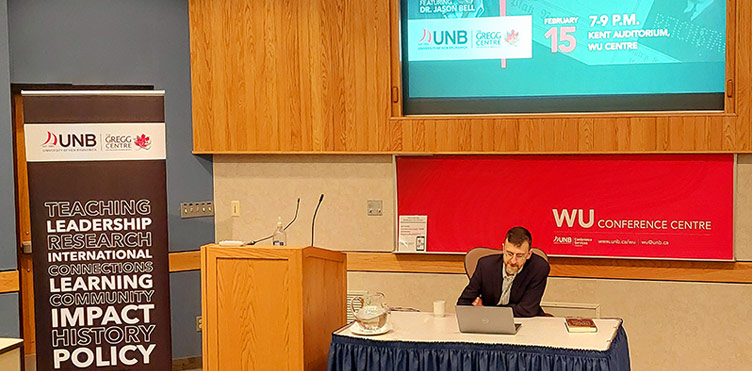
The Annual Graham Lecture in War and Society was inaugurated in 2000 in honour of Professor Dominick S. Graham. After serving with distinction in the British Army in the Second World War, Graham came to UNB in the 1960's during which time he completed his PhD and became an Assistant Professor with the History Department.
His focus soon shifted to war and society issues. In 1971 Graham established the Military and Strategic Studies Program and in 1980 was one of the founding members of UNB’s Centre for Conflict Studies (both precursors to The Gregg Centre for the Study of War and Society).
This lecture series enables academics to present their research to a broader public audience. Through this series, the Gregg Centre has welcomed renowned scholars like retired major general Lewis MacKenzie (“The Canadian Forces from the 1950’s to Afghanistan”, 2009), Gwynne Dyer (“Don’t Panic, But You Can Worry a Little”, 2015), and Jason Bell ( “How Canadian Intelligence Agency Secures Post War Peace: From Winthrop Bell and the Marshall Plan to the ‘The Day After’ Today”, 2024).
March 12, 2026 at 7 p.m. | Free public event
Wu Conference Centre | Kent Auditorium
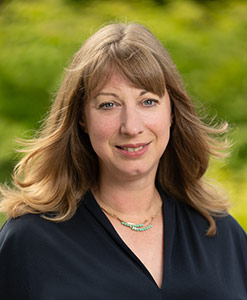
Violence against civilians has marked every modern conflict, yet it has often been minimized, justified, or dismissed as an inevitable byproduct of war. This lecture examines the era of the First World War as a pivotal moment in efforts to document and prosecute such crimes. It shows how governments gathered evidence of abuses committed against French, Belgian, Namibian, Cameroonian, and Armenian civilians, circulated those testimonies in public propaganda campaigns, and later deployed them as proof of war guilt at the Paris Peace Conference.
In the decades that followed, most people dismissed these eyewitness accounts of violence, including wartime rape, as “atrocity propaganda.” Today, historians and activists are reassessing these sources as vital, if complex, archives of survivor voices. By placing 1914–1918 within a longer history of violence against civilians, the lecture invites us to reconsider how societies recognize suffering, assign responsibility, and seek justice in times of war.
For more information, contact us at greggcentre@unb.ca.
Facebook